
October 13, 2026
Prospera POS: How Your Existing Shop Can Become an Everyday Payment Point
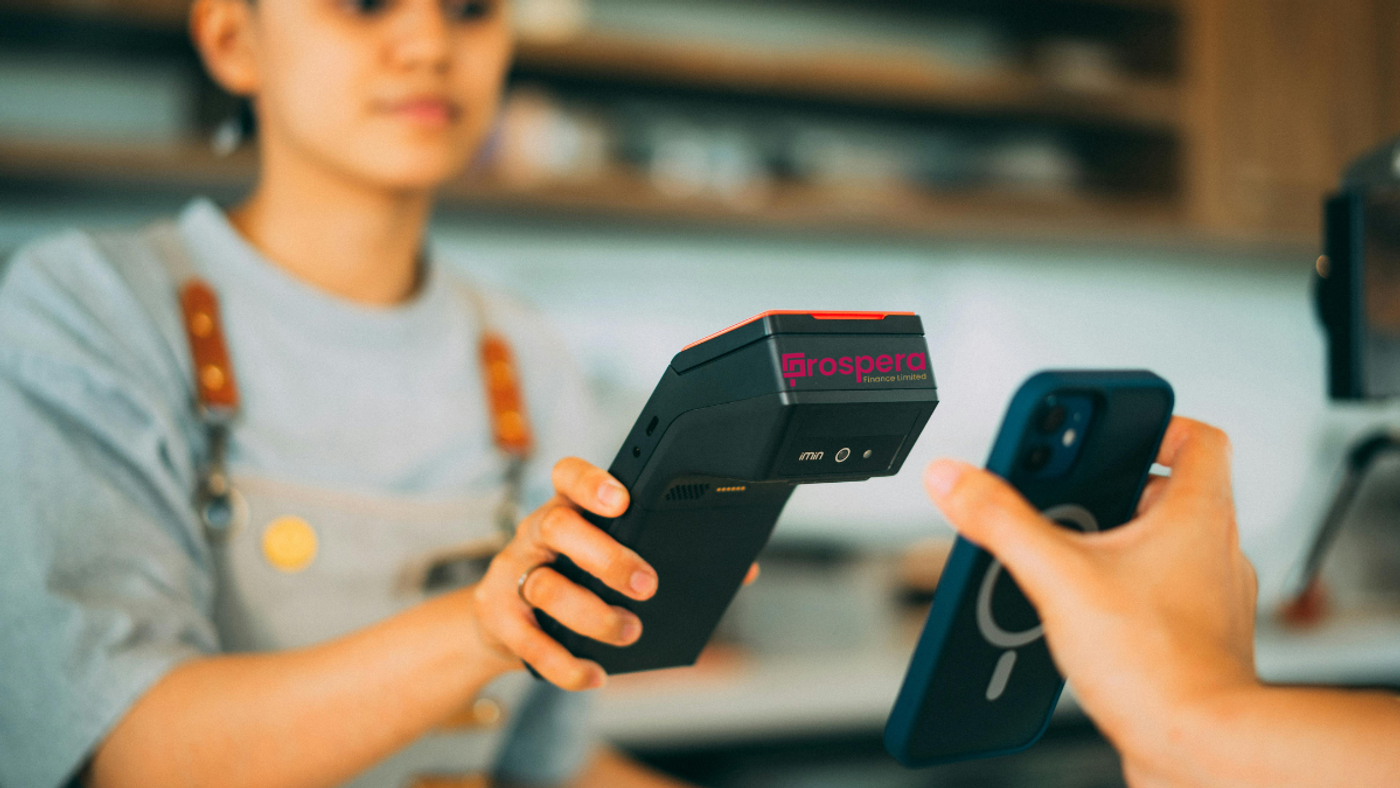
For many small business owners, serving customers efficiently means making it easy for them to pay for goods and services. While some customers prefer cash, others would rather pay with a bank card or another supported payment method.
Having a suitable Point of Sale (POS) terminal can help businesses accommodate these different payment preferences and manage electronic transactions more conveniently.
Prospera Finance Limited provides POS services for eligible merchants, helping businesses accept supported electronic payments. For shop owners, retailers, and other eligible businesses, understanding how POS services work can be an important step towards improving the payment experience they offer their customers.
In this guide, we explain how POS services work, the requirements merchants should understand, how to prepare for an application, and what to consider before getting started.
What Is a POS Terminal?
A Point of Sale (POS) terminal is a device used to process electronic payments for goods and services. Depending on its configuration and the payment services supported, a terminal can allow customers to pay using compatible bank cards and other supported payment methods.
For a business owner, accepting electronic payments provides an additional payment option for customers who may not want to pay with cash.
However, the transactions a terminal can process depend on its hardware, payment application, and service provider configuration. Business owners should confirm which transaction types are supported before applying.
Why Should Your Business Consider POS Services?
Customers have different payment preferences. Offering suitable electronic payment options can make it easier for them to complete purchases at your business.
Here are some considerations for business owners exploring POS services.
1. Offer Customers More Payment Options
Some customers prefer using bank cards or other supported electronic payment methods instead of cash. A POS terminal can provide an additional way for eligible businesses to receive payments.
2. Support Day-to-Day Business Transactions
Electronic payment processing can support ordinary sales transactions when the terminal and payment service are configured for the required payment types.
Merchants should understand how their terminal works and how to confirm whether transactions have been completed successfully.
3. Keep Better Transaction Records
POS transactions generate records that merchants can use when reviewing sales and reconciling payments.
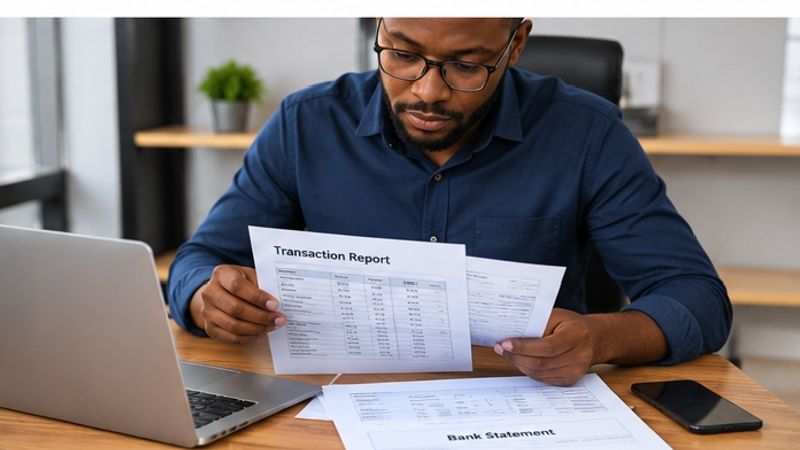
Keeping receipts, checking transaction reports, and comparing settlement records with bank statements can help business owners identify discrepancies and follow up on missing payments.
4. Make Payment Processes More Convenient
A suitable POS service can give customers another way to pay without relying exclusively on cash.
The benefits a business experiences will depend on its customers, the transactions it processes, and the terms of its POS service.
How Does the Prospera POS Application Process Work?
Applying for a POS terminal involves more than completing a form. The application must be reviewed, the merchant's details must be verified, and the terminal must be configured before use.
According to the Prospera Finance Limited POS Application and Merchant Service Guide, the process generally follows these steps.
Step 1: Express Interest in Obtaining a POS Terminal
The process begins when a business owner expresses interest in obtaining a POS terminal.
Before proceeding, the applicant should understand the purpose of the terminal and the payment services it is intended to support.
Step 2: Complete the Application Form
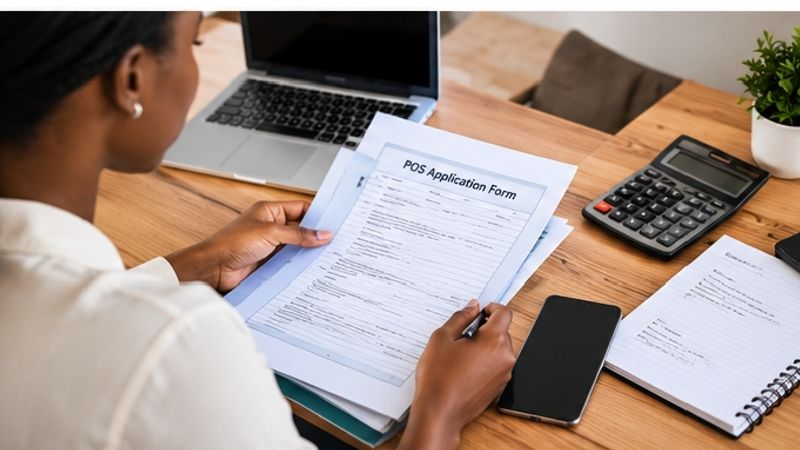
The applicant completes the POS application form and submits the required documents.
Providing accurate information helps the relevant parties assess the application and verify the merchant's details.
Step 3: Complete the Verification Process
Prospera verifies the applicant's identity, bank account, business details, and relevant compliance information.
Applicants should provide accurate and verifiable information throughout this process.
Step 4: Provide a Statement of Account
The guide identifies a statement of account as part of the application process.
Applicants should confirm the applicable statement requirements with the relevant provider before submitting their documents.
Step 5: Await Application Review and Approval
The application is reviewed by the relevant authorised provider.
Submitting an application does not automatically guarantee approval. Merchant applications are subject to the applicable verification and due-diligence requirements.
Step 6: Terminal Assignment and Configuration
After approval, the terminal is assigned, registered, configured, and deployed according to the applicable arrangements.
Step 7: Receive Training and Test the Terminal
Before beginning transactions, the merchant receives training and tests the terminal.
Business owners should understand the basic operating procedures, transaction confirmation process, and appropriate steps for reporting technical problems.
What Documents May You Need to Apply?
Preparing the required documents in advance can help applicants organise their applications.
The Prospera POS Application and Merchant Service Guide identifies the following documents and information:
- Completed POS application form.
- Valid government-issued identification.
- Recent passport photograph.
- Bank account details for settlement.
- Bank Verification Number (BVN) or other required identity information.
- Business address or proof of address.
- Utility bill or other address evidence, where requested.
- Merchant settlement mandates authorising payment into the nominated account.
The precise requirements may vary according to the account type, applicable rules, and the relevant acquiring bank or payment service provider.
Before applying, confirm the current document checklist with Prospera or the relevant authorised provider. This helps you avoid relying on an incomplete or outdated list.
Who Can Apply for a POS Terminal?
Applicants should generally meet the following requirements outlined in the guide:
- Be an eligible individual business owner or registered business.
- Operate a verifiable business or provide a valid business purpose for the terminal.
- Have a valid bank account for settlement.
- Provide valid identification and verifiable contact details.
- Have a verifiable business address or operating location.
- Pass the required Know Your Customer (KYC) checks.
- Agree to the applicable POS terms, fees, and settlement conditions.
Final eligibility criteria depend on the acquiring bank or payment service provider.
Business owners should therefore confirm their eligibility before making plans based on the assumption that an application will be approved.
What Fees and Charges Should You Consider?
Understanding the cost of a POS service is an important part of deciding whether it is suitable for your business.
The Prospera POS guide identifies several types of charges that may apply, depending on the merchant agreement and service arrangements.
Merchant Service Charge
A Merchant Service Charge (MSC) is a fee applied to eligible transactions under the merchant agreement.
Merchants should confirm the applicable rate and how the charge is calculated before activating the service.
Transaction Charges
Additional processing or service fees may apply to particular transactions, depending on the applicable arrangement.
Maintenance or Replacement Fees
Charges for repairs, replacement, or servicing may apply where specified in the relevant terms.
Ask About the Full Cost Before Activation
Before accepting a POS service, clarify:
- Which charges apply to your account.
- How transaction fees are calculated.
- Whether maintenance or replacement charges apply.
- When applicable fees are deducted.
- Which settlement conditions apply to your transactions.
The available guide does not specify universal fee amounts. Applicable charges should be disclosed and confirmed with the relevant provider before activation.
How Does POS Settlement Work?
Settlement is the process through which proceeds from successful POS transactions are paid into the merchant's nominated bank account.
Understanding settlement is important because a successful transaction notification and the arrival of funds in a bank account are separate stages of the payment process.
The general process works as follows.
Step 1: The Customer Makes a Payment
A customer completes a card payment or another transaction supported by the terminal.
Step 2: The Transaction Is Processed
The payment passes through the relevant payment network and receives an approval or decline response.
Merchants should follow the terminal's instructions and check the transaction status before treating a payment as completed.
Step 3: Transactions Are Reconciled
Successful transactions and applicable fees are included in settlement processing.
Merchants should retain their transaction records so they can compare processed payments with the amounts credited to their accounts.
Step 4: The Merchant's Account Is Credited
Settlement proceeds are paid into the registered merchant account according to the applicable settlement cycle.
The guide refers to T+1 settlement for domestic POS transactions under Nigeria's electronic payment framework. T+1 generally means the next day after the transaction date.
However, actual crediting can depend on the provider's processing arrangements, weekends, public holidays, and the resolution of exceptions. Merchants should confirm the settlement terms that apply to their particular service.
What Should You Do If a Payment Does Not Reflect?
If a transaction appears successful on the terminal but the expected funds have not arrived, do not rely solely on the terminal receipt.
Instead:
1. Check the transaction report and bank statement.
2. Retain the transaction receipt and reference.
3. Record the transaction date and amount.
4. Contact the designated support channel if the discrepancy remains unresolved.
Keeping accurate records can make it easier to investigate missing settlements and other transaction issues.
Which Transactions Can a POS Terminal Support?
The transactions available to a merchant depend on the terminal, payment application, and provider configuration.
The Prospera guide identifies two transaction types:
Card payments: Customers use supported bank cards to pay for goods and services.
Transfers: Customers pay for goods and services using supported banking applications.
Not every terminal necessarily supports every transaction type. Merchants should confirm which services are enabled on their assigned terminal before offering them to customers.
If your business needs a particular payment feature, make sure the provider confirms that it is available under your proposed service arrangement.
Protect Your Business and Customers
Handling electronic payments comes with a responsibility to protect transaction information and follow appropriate security procedures.
Merchants should adopt the following practices:
- Keep transaction receipts and reports for reconciliation.
- Check transaction statuses carefully.
- Compare transaction records with bank statements.
- Report suspected fraud, disputed debits , terminal faults, and missing settlements through the designated support channel.
- Provide the transaction reference, date, amount, terminal ID, and a brief description when reporting an issue.
- Never request or disclose a customer's Personal Identification Number (PIN).
If a transaction fails or a customer reports a disputed debit, follow the provider's approved dispute-resolution process rather than making assumptions about what happened.
Is a POS Terminal Right for Your Business?
Before applying, consider how your business operates and whether electronic payment acceptance would be useful to your customers.
Think about the following questions:
- Do your customers request cards or other supported electronic payment options?
- Do you have a verifiable business location and a suitable bank account?
- Can you provide the required application documents?
- Do you understand the applicable fees and settlement conditions?
- Do you know how to check transactions and report problems?
- Does the service support the payment types your business needs?
Your answers can help you identify the information you still need before applying.
It is also worth reviewing the applicable terms carefully. Eligibility, transaction availability, charges, and settlement arrangements should be confirmed with the relevant provider rather than assumed.
Get Started with Prospera POS
For businesses exploring electronic payment acceptance, understanding the application process, documentation requirements, fees, and settlement arrangements is a useful first step.
Prospera Finance Limited's POS application process includes merchant verification, application review, terminal configuration, and training before transactions begin.
If you are considering a POS terminal for your business, first confirm your eligibility, obtain the current document checklist, and ask about the fees, supported transactions, and settlement terms applicable to your proposed service.
Being prepared helps you make a more informed decision about whether the service fits your business needs.
Contact Prospera Finance Limited through its approved customer service channel for the current application requirements and product details.